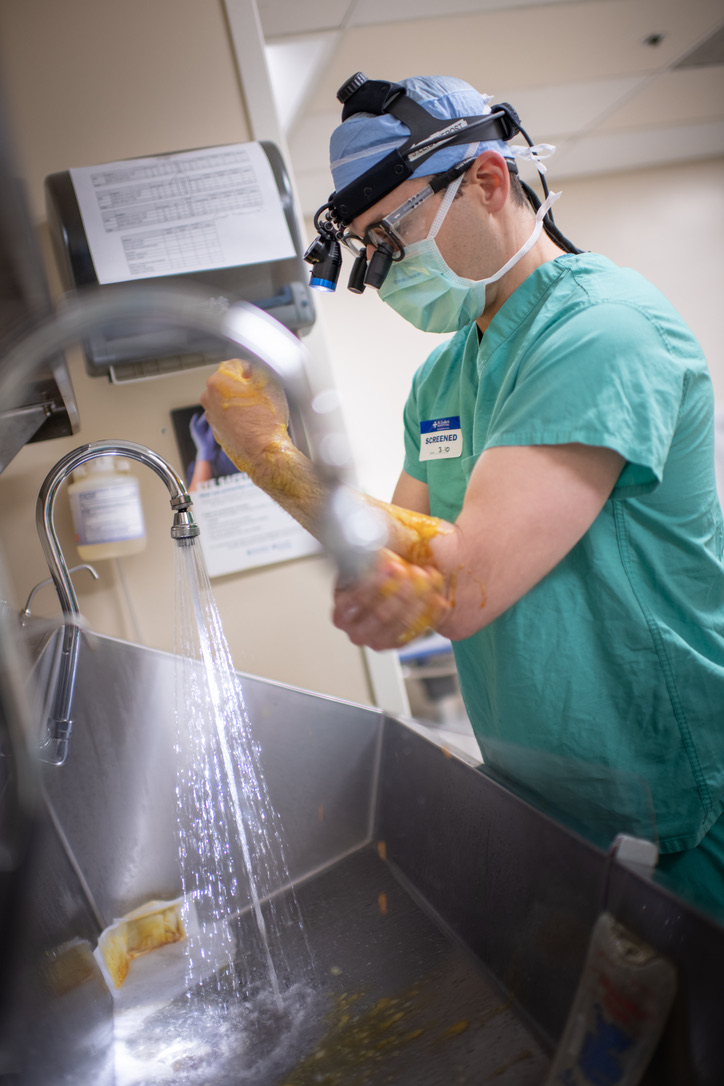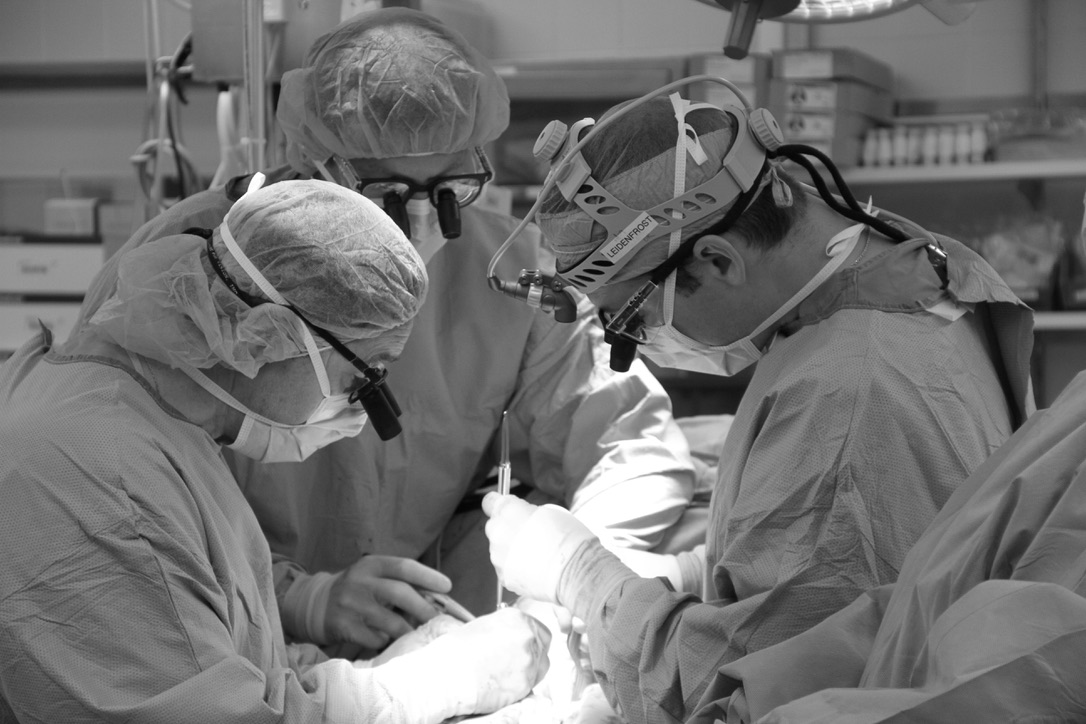
Watch: in my words
Mechanical or tissue valve — how I help patients choose
New videos are being recorded now. Captions will be included.
How it works
A catheter goes from a vein in the leg into the heart, crossing the wall between the upper chambers (a “transseptal” approach). The new valve expands inside the old one and takes over its job.
What the national data show
In 1,529 U.S. patients who received a balloon-expandable valve inside a failed surgical mitral valve (STS/ACC TVT Registry), the procedure was technically successful in 96.8% of cases. With the transseptal approach, mortality was 5.0% at 30 days and 15.8% at one year in this older, higher-risk group, with lasting improvement in heart-failure symptoms.
96.8%
technical success
5.0%
30-day mortality, transseptal approach, in an older, higher-risk group
Planning ahead
Whether valve-in-valve is possible depends on the size and type of your original valve. That’s one reason the first valve choice matters: a valve chosen with a future valve-in-valve in mind keeps more options open.
Sources for this section: JAMA, 2020 — mitral valve-in-valve, STS/ACC TVT Registry · TCTMD — valve-in-valve durability and planning ahead (2020)
Common questions
Who is a candidate?
Patients whose tissue mitral valve from an earlier operation has worn out. Suitability depends on the original valve’s size and type, so we review your prior operative report and imaging together.
Source: JAMA, 2020 — mitral valve-in-valve, STS/ACC TVT Registry
Is it better than a second open operation?
For many patients it avoids reopening the chest, but not for everyone. The heart team weighs your anatomy, age and health against a redo surgical replacement.
Source: JAMA, 2020 — mitral valve-in-valve, STS/ACC TVT Registry · TCTMD — valve-in-valve durability and planning ahead (2020)
What results can I expect?
In the national registry, the procedure was technically successful in 96.8% of patients, with lasting improvement in heart-failure symptoms. Those patients were older and higher-risk, so your own risk may differ.
Source: JAMA, 2020 — mitral valve-in-valve, STS/ACC TVT Registry